

The yin yang
One hill, two faces,
and a sun that moves
The whole of the yin yang on one page: what it is, how to read it, where it came from, and what it has to say about an ordinary week. Then five short essays, if you want to go deeper. Ink and watercolor throughout.
Start here
What the yin yang is, in plain words
The yin yang is a picture of how two opposite things need each other. Day and night. Rest and work. The hard year and the easy one. Not one fighting the other. One turning into the other, over and over.
The dark half is yin. In Chinese the word first meant the shady side of a hill, the north face where the snow stays and the moss grows. Yin is night, shade, cool, quiet, rest. The light half is yang: the sunny side of the same hill. Yang is day, sun, warmth, movement, doing.
Neither half is the good one. That is the part people get wrong most often. The hill needs both faces, and so does a day, and so do you. A life with no yin in it is not a happy life. It is a person who never sleeps.
The curve between the halves, and the small dot inside each, say the rest: the two sides are always moving into each other, and each one carries a little of the other inside it. Keep reading and the whole symbol will be yours in about five minutes.


The four parts
How to read the symbol
Four parts, four plain meanings. Once you can see them, you cannot unsee them.
-
The two halves
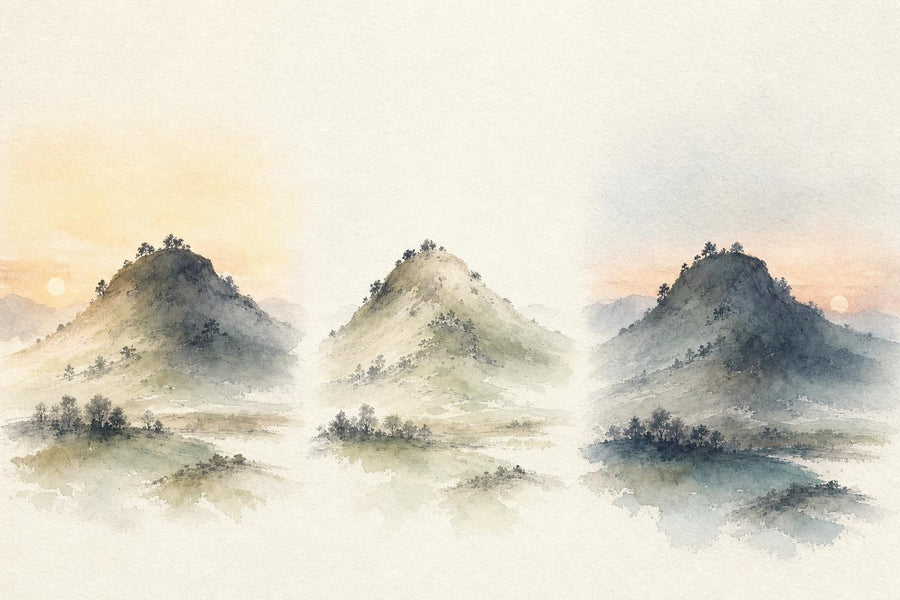
One is dark, one is light, and they are exactly the same size. Dark is yin: night, shade, rest, the quiet inward things. Light is yang: day, sun, movement, the outward things. They are not enemies, and neither is the good one. They are two faces of one hill, and the sun moves.
In a life: the tired season and the busy one are the same you.
-
The curve
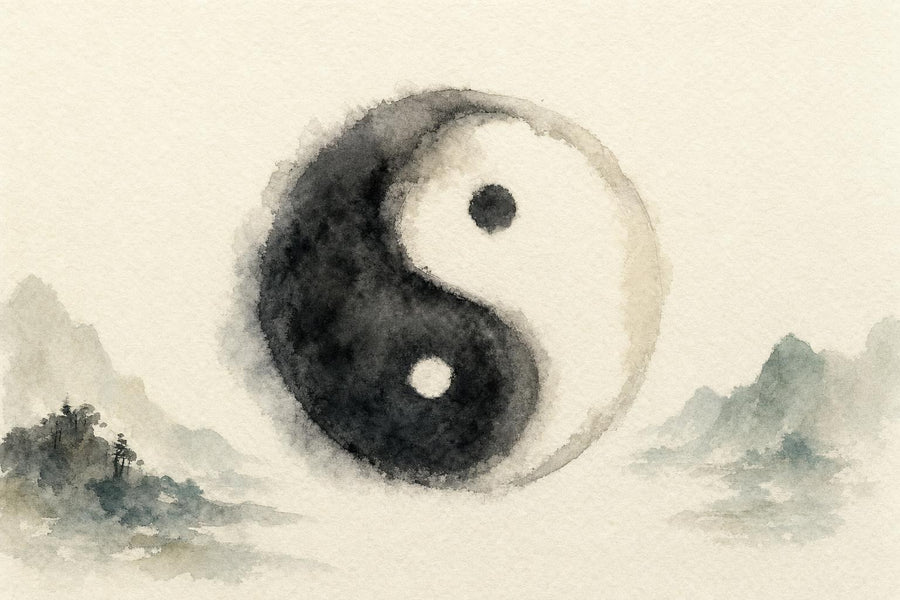
The halves do not meet at a straight line. They meet in an S. Each one is widest exactly where the other is thinnest, and shrinks to nothing exactly where the other is full. That is the symbol's way of saying this is not two things sitting side by side. It is one thing, turning. Winter is deepest on the very day the light starts coming back.
In a life: the low point and the turning point are usually the same day. You just cannot see it from inside.
-
The dots
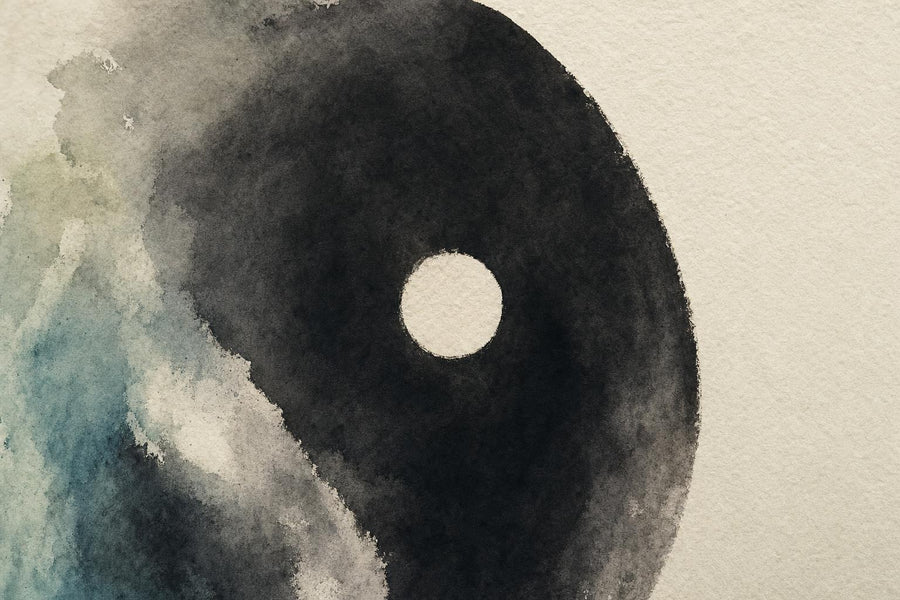
Inside the dark, a small circle of light. Inside the light, a small circle of dark. Each half carries a seed of the other. There is no pure dark in the picture and no pure light. The design will not allow it.
In a life: in a bad week there is always one small good thing. In a good week there is always one small worry. Both are supposed to be there.
-
The circle around it
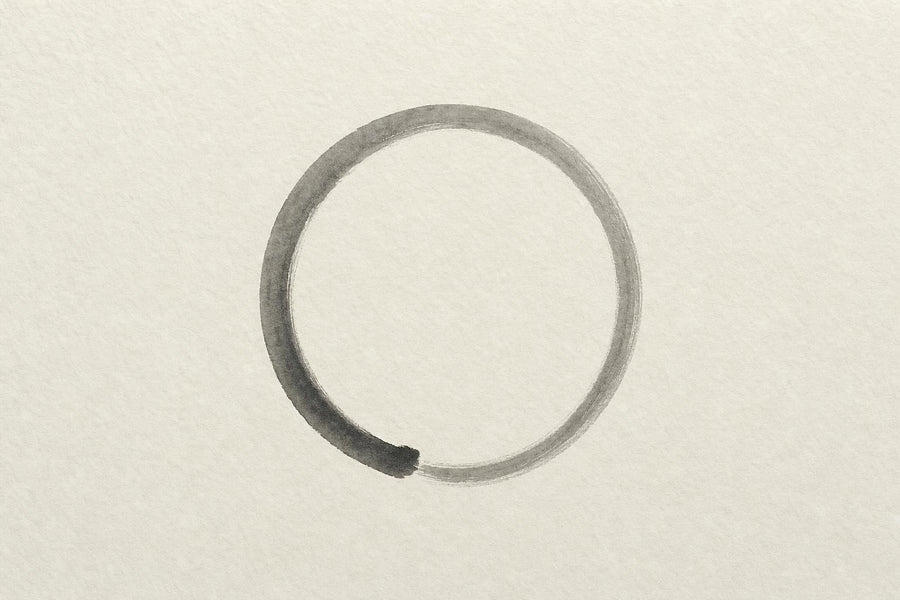
The whole figure sits inside a circle, and in the oldest diagram a second, empty circle sits above it. The circle says it is all one thing, and that the turning never stops. The empty one says that before anything was sorted into light and dark, there was a moment when it was not sorted at all.
In a life: the breath before you decide what kind of day it is going to be.
A short history
Where the symbol came from
Two words, one line, a diagram, and a swirl. The picture on the pendant is the last step in a story that took more than two thousand years.
-

First, two words. Long before there was a symbol, yin and yang were everyday words for the shady and sunny sides of a hill. The modern characters still show it: a mound of earth, with the moon beside one and the sun beside the other. Place names carry it too. A town on the sunny side of a mountain often has yang in its name.
-

Then, one line. The Daodejing, a book well over two thousand years old, names yin and yang together just once: all things carry yin and embrace yang. Not a balance. A posture.
-

Then, a diagram. About a thousand years ago the philosopher Zhou Dunyi drew how the world unfolds: an empty circle at the top, and under it a circle divided into dark and light, in rings. His first four words: without poles, and yet the greatest poles.
-

Then, the swirl. About five hundred years ago a scholar named Lai Zhide simplified the rings into the two curling shapes we know, and the small dots came in with them. The figure's proper name is taijitu, the diagram of the great polarity.


A popular story says the shape was traced from a year of noon shadows on a sundial. No old text says so. A modern physicist has shown that the hours of daylight through a year do draw something very like it, which is a lovely fact, but a new one.
Bringing it home
Now think about your own week
Set the symbol down for a minute and think about the last stretch that felt dark. Maybe it was after a breakup, when the apartment you loved felt like someone else's. The year the work dried up. The winter after a parent died. Or maybe it is right now, and you do not have a name for it. You just know that last summer you laughed more easily than this.
The symbol has something to say to that, and it is not cheer up.
It says you have not been moved to a different hill. The ground under you is the same ground that was warm last year. What changed is where the light is falling, and on a hill the light is the one thing that never stays put.
Not a different hill. The same hill, at a different hour.
It says the lowest night is usually the one the turn begins on. The night on the kitchen floor is so often the night before you finally ask for help. You cannot see that from inside the dark. Nobody can.
It says that in a week that is mostly dark, you should not look for the light to be half of it. Look for the dot. The friend who kept texting. The ten minutes in the car before you went in. Small, round, whole, and already there.
And it says the opposite too, gently. A good season has a small dark circle in it from its first day. The new love where you catch yourself bracing. The Sunday-night knot in a job you like. That is not a warning. It is the dot. You can nod at it and go back to your evening.
Most of all, it says you are allowed to carry both at once. You can grieve your mother and laugh at your daughter in the same hour. The old line does not say to set the dark down before you pick up the light. It says carry one, embrace the other. That is not a contradiction. That is the posture of everything alive.
Three things it is not
-
Not good versus evil
Yin is not the bad half. Night is not a failure of day. Rest, grief, quiet and slowness are yin, and a life needs them as much as it needs the bright things.
-
Not a perfect fifty-fifty you have to hold
The symbol is a picture of turning, not a scale you keep level. Some seasons are mostly dark. Some are mostly light. Neither one is a mistake.
-
Not an order to stay calm
Be balanced can sound like do not feel too much. The symbol says the opposite. Feel the whole thing. Just remember that it turns.
Try one this week
Five small practices
One from each essay. None of them takes more than a breath, and none of them asks you to feel better first.
-
Name the hour
When a season feels like the wrong hill, say the hour instead. Not “my life has gone dark,” but “I am on the north face, and it is late afternoon.” It puts the sun back into the sentence, and the sun moves.
From The Shady Side of the Hill -
Say the midwinter sentence
On the day a thing feels most settled in its gloom, say out loud: the days are getting longer. You will not feel it. Say it anyway. The shortest day is a turning point by definition.
From A Curve, Not a Line -
Find the dot
In a hard week, find the one small, round, whole good thing that is actually there. Not a silver lining. A real thing. Name it. That is enough.
From The Dot in the Dark -
Take one breath, unsorted
Before a conversation you are bracing for, take one breath in which you decide nothing. Do not call the day good or hard yet. Do not call the person a friend or a problem. Then step in.
From The Empty Circle Above It -
Name both
Once a day: I am carrying, and name it. I am holding, and name that. Both in one breath. Do not try to make them even. Just notice you are doing both, and still standing.
From Carry One, Embrace the Other
Go deeper
Five short essays, one true thing each
Everything above is on this page on purpose. These go further: each essay starts from something checkable, a character, a diagram, a line of text, and follows it into an ordinary life. Read them in order or start anywhere; they link to one another.
-
 One hill, two faces.
The Shady Side of the HillThe words yin and yang began as the two faces of one hill. The hill never changes. The hour does.Read the essay
-
It turns.
A Curve, Not a LineThe two halves of the symbol meet in an S, and each is widest exactly where the other begins.Read the essay
-
A seed in each half.
The Dot in the DarkEach half of the symbol carries a small circle of the other. It is not a flaw in the design.Read the essay
-
Before the sorting.
The Empty Circle Above ItIn the oldest diagram, a blank circle sits above the one divided into light and dark.Read the essay
-
 A posture, not a balance.
Carry One, Embrace the OtherThe one line in the Daodejing that names yin and yang describes a posture, not a balance.Read the essay


- Not a different hill. The same hill, at a different hour.
- The fullest dark is where the turn begins.
- In the dark, do not look for the light. Look for the dot.
- Before the light and the dark, a circle with nothing sorted in it.
- Carry the dark on your back. Hold the light in your arms.
- Nothing in a life has a straight edge.
Quick questions
The things people ask
Short answers, for the questions that come up most. The essays above have the long ones.
Which side is yin and which is yang?
The dark half is yin, the light half is yang. Yin is the shady side of the hill: night, moon, cool, rest, stillness, the inward things. Yang is the sunny side: day, sun, warmth, movement, the outward things. Each half holds a small dot of the other.
Is yin the bad one?
No. Neither half is good or bad. The symbol is about two things that need each other, like sleep and waking. A day with no night in it is not a better day. It is a day that never ends.
What is the symbol actually called?
Its proper name is taijitu, which means something like diagram of the great polarity. Most people just say yin yang. The modern form, two curling halves with a dot in each, dates from about five hundred years ago.
Is the yin yang Buddhist?
No. It is Chinese, and older than the arrival of Buddhism in China. It belongs to the Daoist and wider Chinese way of seeing the world, where opposites make each other. We keep it beside the lotus and our other symbols because it says something true in one picture.
What do the two dots mean?
That nothing is all one thing. Inside the darkest part there is a seed of light, and inside the brightest part a seed of dark. In a life: the hard week has one good thing in it, the good week has one small worry, and both belong.
Why wear one?
Because it is a reminder you can touch. On a hard day it says: same hill, different hour. On a good day it says: hold this, it turns. Our yin yang pieces are just below. Pendants come without a chain unless the page says otherwise.
Keep one close
The yin yang, in silver, stone, cotton and clay
The pieces the essays mention and a few beside them, pulled live from the shop. Prices and stock are current. Pendants come without a chain unless the page says otherwise.
-
 Pendants
Textured Sterling Silver Yin Yang Pendant
$56.00
-
 Pendants
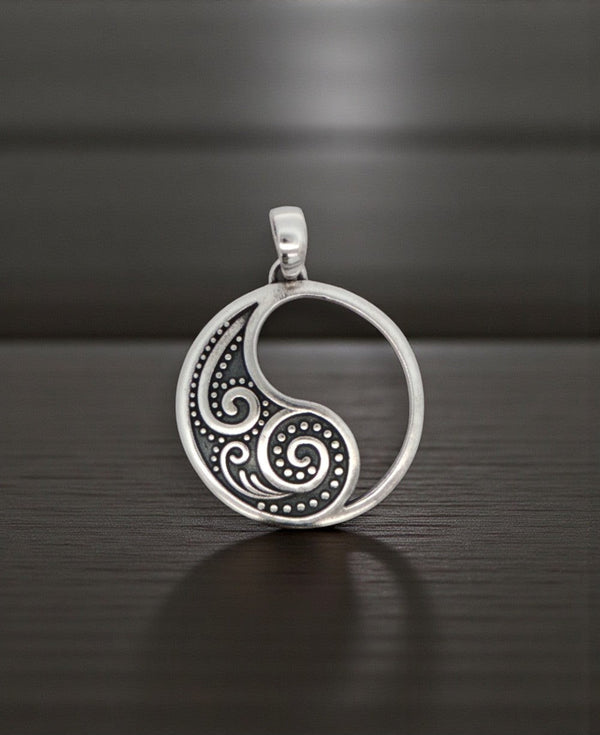
Yin Yang Silver Spiral Symbol Pendant
From $36.00
-
 Earrings
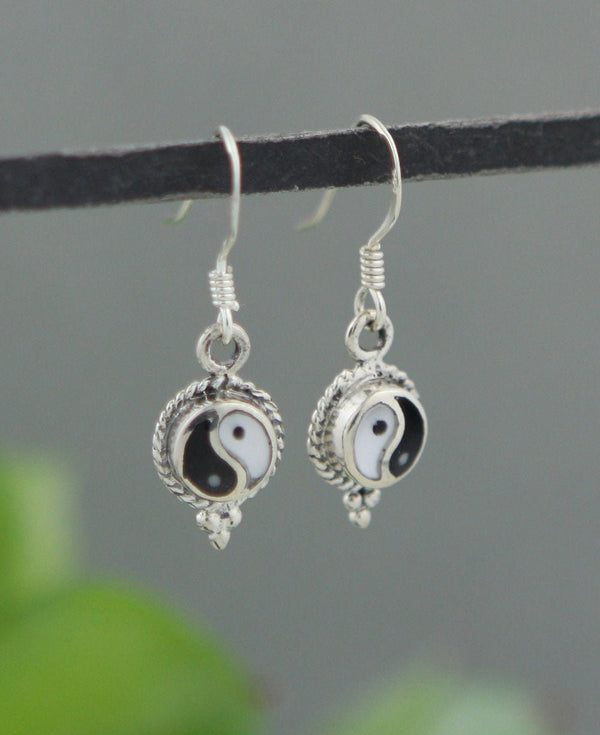
Dainty Yin Yang Earrings with Black Onyx and Mother of Pearl
$44.00
-
 Pendants
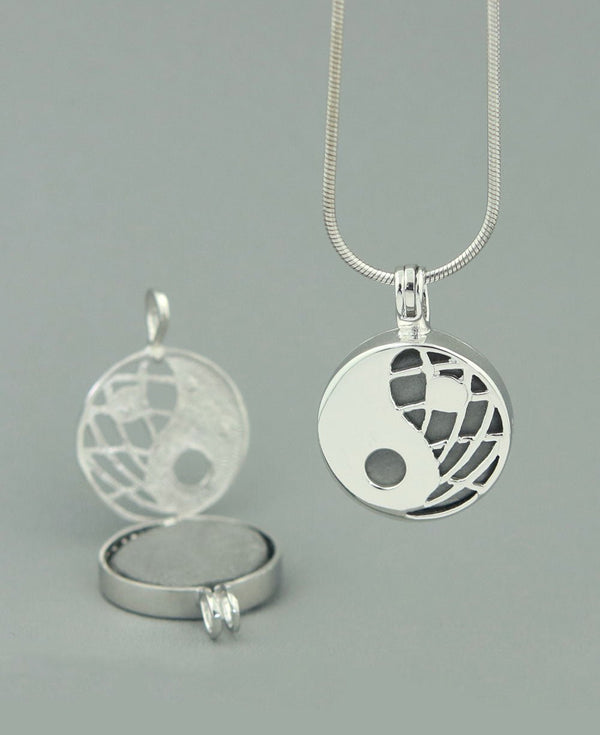
Sterling Silver Balancing Yin Yang Locket Pendant
$64.00
-
 Prayer Beads
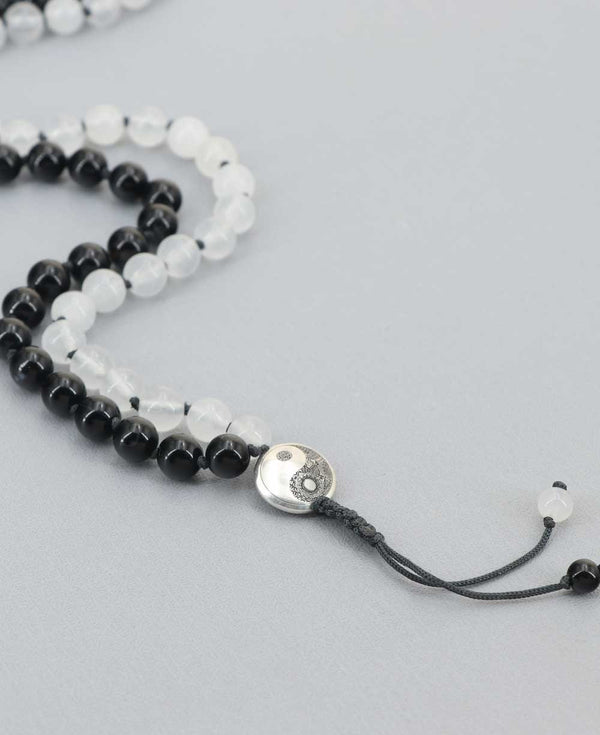
Yin Yang Balance Knotted 108 Beads Meditation Mala
$64.00
-
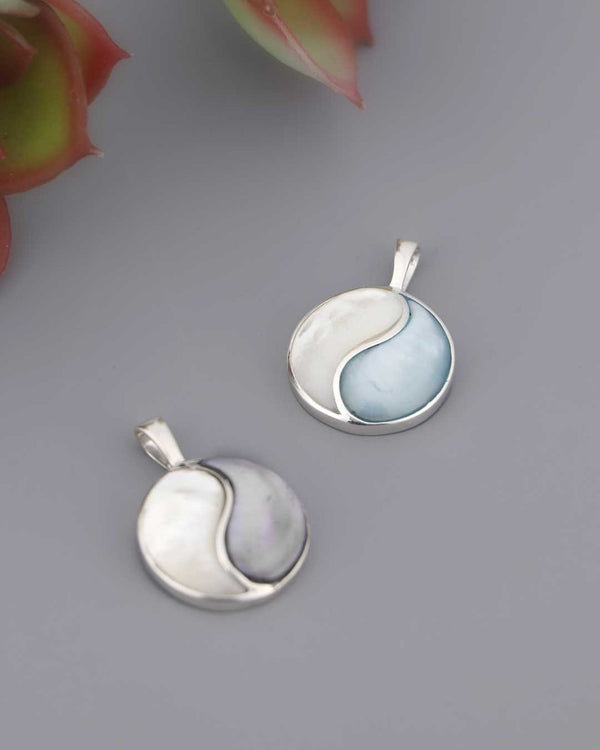 Pendants
Sterling Silver Mother of Pearl Yin Yang Pendant
$88.00
-
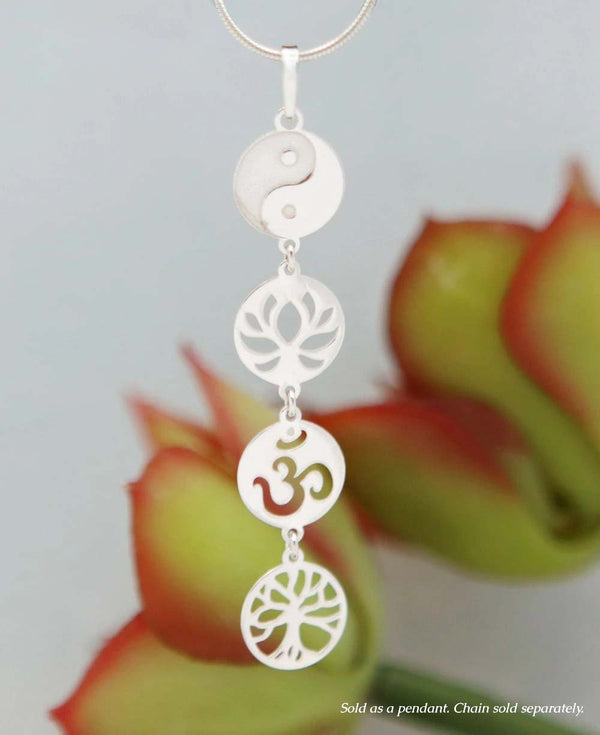 Pendants
Lotus
$46.00
-
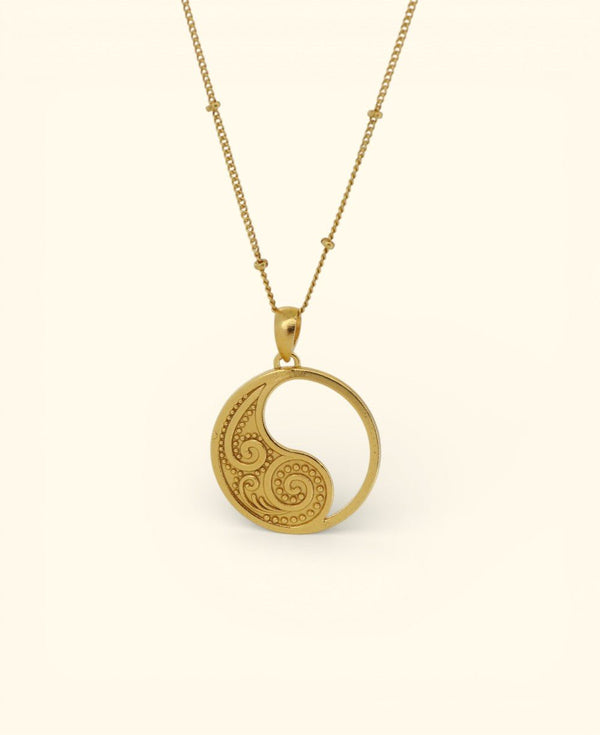 Necklaces
Spiral Yin Yang Necklace
$62.00
-
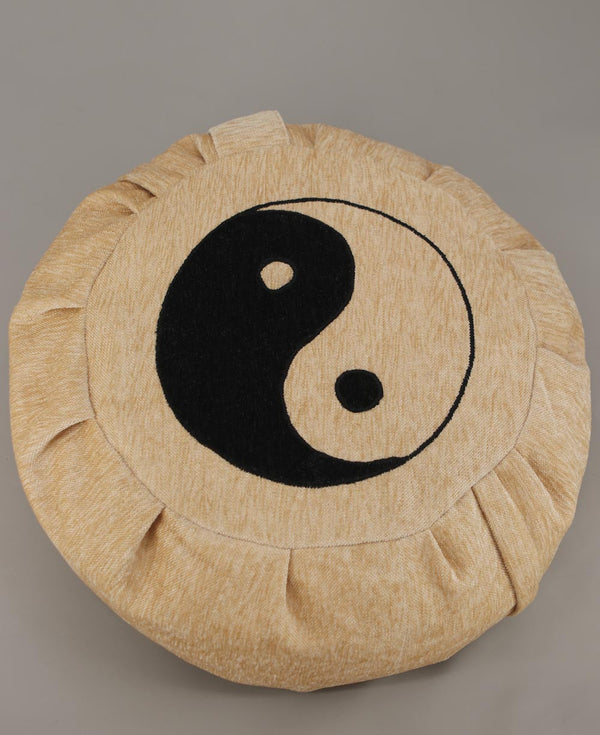 Meditation Cushions
Yin Yang Zafu Meditation Cushion
$64.00
-
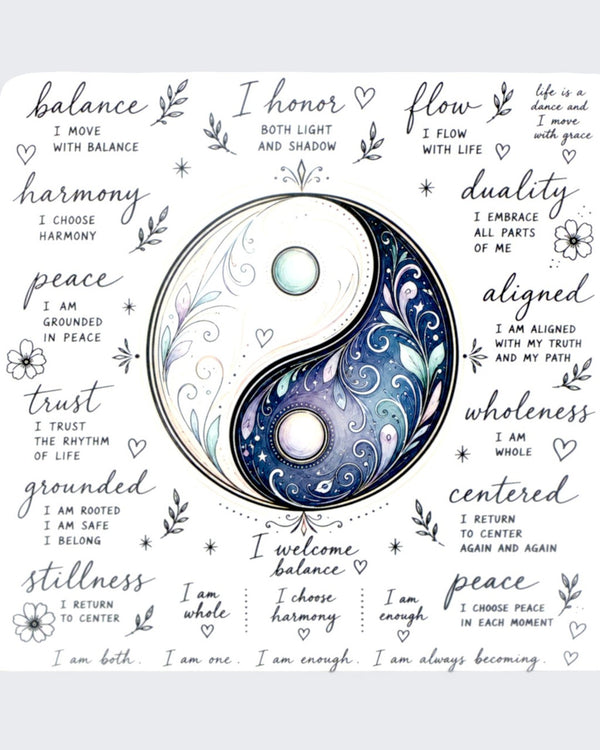 Wall Art
Yin Yang Affirmation Canvas Wall Art
$32.00
-
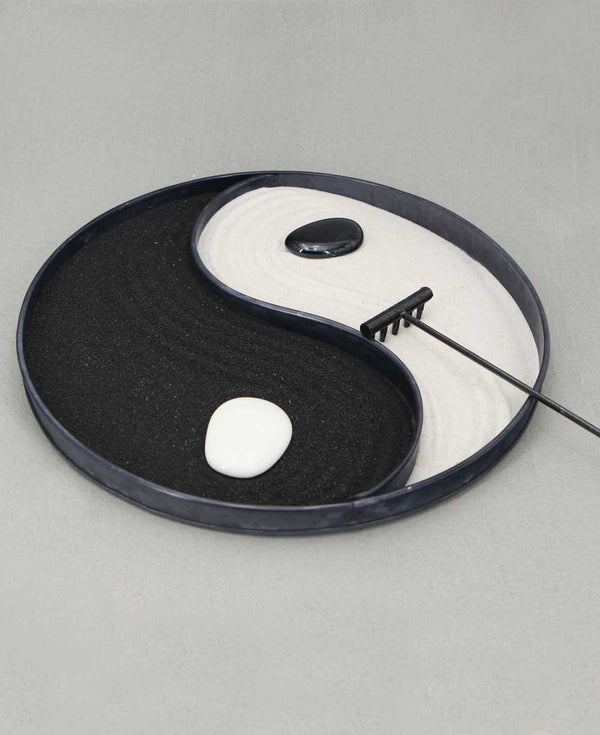 Zen Gardens
Playful Meditation Yin Yang Zen Garden
$40.00
-
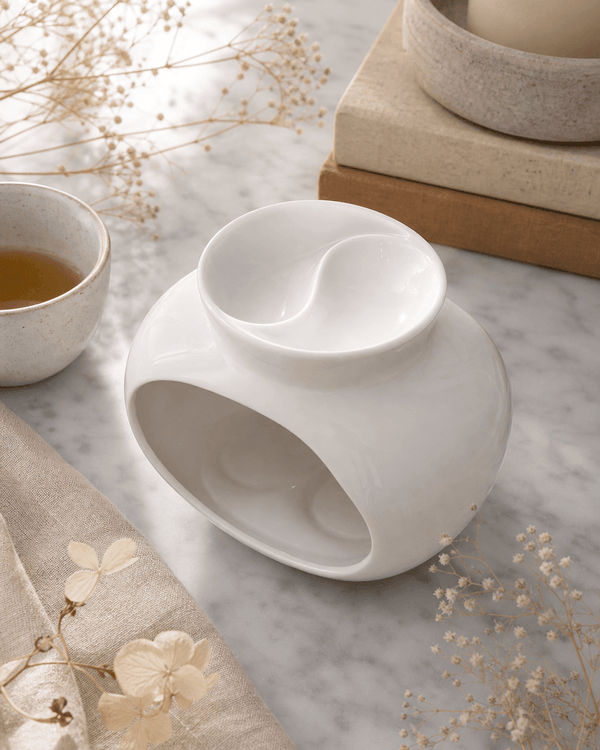 Home Decor
Yin Yang Ceramic Oil & Wax Melt Burner
$21.00


The other series
The lotus came first
These essays are the second set in a slow walk through the symbols Buddha Groove works with. The first was the lotus: eleven essays, each on one true thing the plant does, from the seed that sinks to the pod that bows.
One hill.
A sunny face, a shaded face.
A sun that will not stay put,
and a seed of each inside the other.
Somewhere a hill is turning its shaded face slowly toward the morning, as it does every day, without being asked.