

The tree of life
Rooted wide. Alive at the edge.
Still growing.
The whole of the tree of life on one page: what a tree actually does, how to read each part of it, what the symbol has meant for thousands of years, and what it has to say about the stretch you are in. Then fourteen short essays, one for each true thing. Watercolors throughout.
Start here
What the tree of life is, in plain words
The tree of life is the one symbol almost every people on earth drew without ever meeting each other. A tree with roots below, a trunk, and branches above, standing for the whole of a life: where you came from, what holds you up, and what you reached for. Norse poets had one. So did the Hindus, the Buddhists, the Celts, the rabbis of medieval Spain, the painters of French cathedrals, and Charles Darwin in a notebook in 1837.
They were all looking at the same thing, so this page starts there: not with the symbol, but with the tree. What a living tree actually does turns out to be stranger and kinder than the symbol lets on.
A tree is held by shallow roots spread wide, not by one deep one. It is made almost entirely of air. It is alive only in a thin layer at its edge, and it grows faster the older it gets. It cannot heal a wound, so it walls it off and grows around it. It seals the place before it lets a leaf go. It carries next spring through the winter, already finished, on the outside of its branches.
Every one of those is something a person does too, or could. Keep reading and you will be able to read the whole tree, and probably a few people, in about five minutes.


The five parts
How to read the tree
Five parts, five plain meanings. Each one is something a tree really does, checked against the botany, and each one is something you have done too.
-
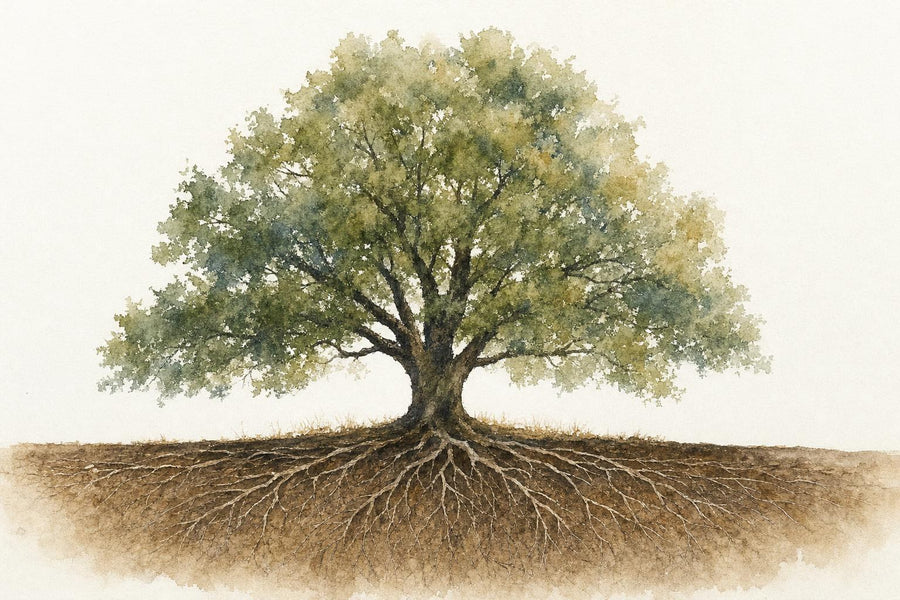
The roots: wide, not deep
Dig under a real tree and most of the roots are in the top foot and a half of soil, reaching two or three times wider than the branches. The deep taproot children draw is a seedling's trick that stops mattering. A tree that stands for a century is held by a wide, shallow net of small holds.
In a life: rooted does not mean one deep thing. It means many small holds, close by, spread wide. The Tuesday call. The coffee place. The walk.
-
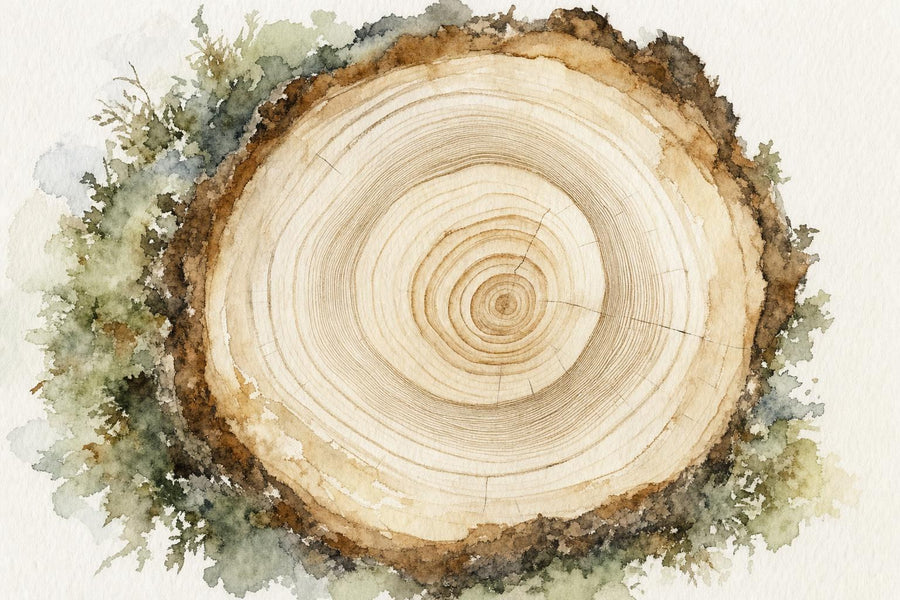
The trunk: where the years are kept
A tree grows taller only at its tips. The trunk grows outward, one ring a year, so a nail driven in at eye level stays at eye level forever, wrapped in new wood. A dry year leaves a thin ring, never a missing one. And a wound is never filled in: the tree walls it off and grows around it, which is why the people who study trees say a tree does not heal, it seals.
In a life: the old hurt stays at its height while you grow past it. The hard year is thin, not missing. You will not erase the thing. You will wall it off, and grow.
-
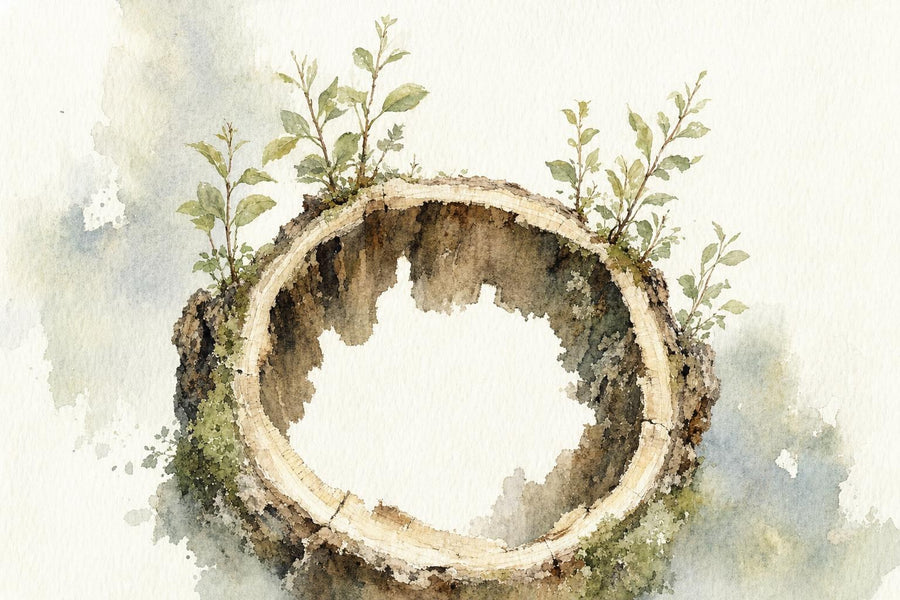
The living edge
Almost all of a mature tree is dead wood. The heartwood at the center stopped living years ago; it is there for strength, like bone. The life is a thin layer just under the bark, a few cells wide, plus the leaves, the buds and the root tips. That is why a tree can lose its whole center to rot and leaf out for another hundred years. And it is why the oldest, biggest trees add the most new wood each year: more edge, more leaves, more light.
In a life: the thing you lost was holding you up. It was never where you were alive. And you are not slowing down with age. You have more leaves than you ever had.
-
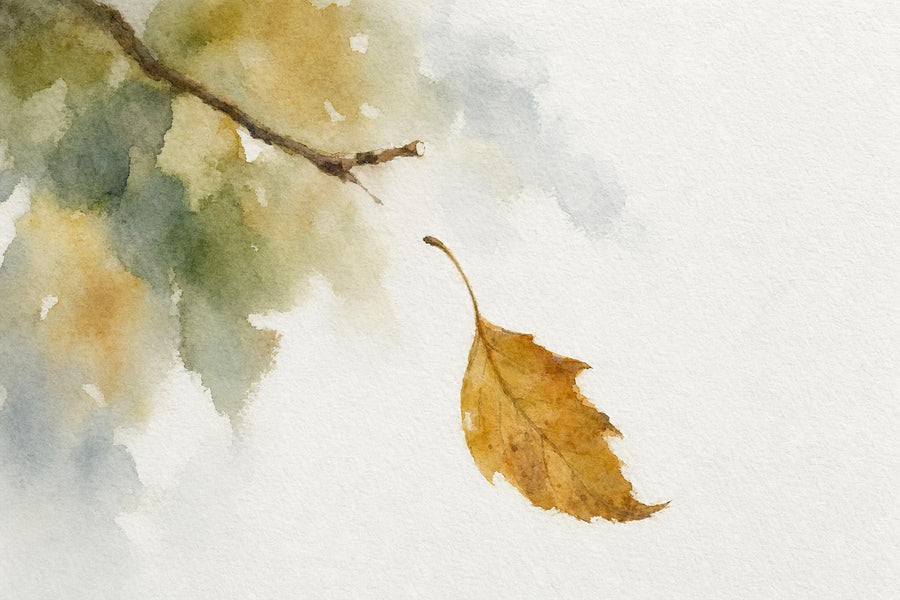
The leaves: made of air, let go on purpose
A willow grew for five years in a pot that lost almost no soil. Nearly all of a tree is carbon the leaves took from the air, one breath at a time. And in autumn the leaves do not simply fall. The tree takes back what it can, builds a corky seal at the base of each stem, and only then lets go. Every leaf scar on a winter twig was closed before the leaf left.
In a life: what built you was invisible and daily. And letting go is something you do, in order: keep what was valuable, seal the place, then open your hand.
-
The buds: next spring, already made
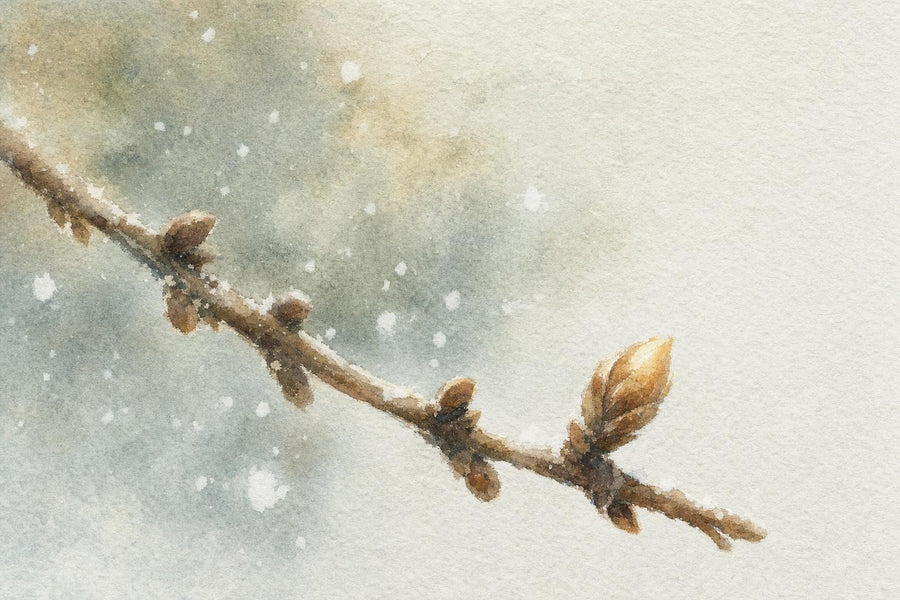
Cut open a winter bud and next spring's leaves are folded inside, tiny and complete. The tree built them the summer before, in the long days, then wrapped them, drew the water out so they would not freeze, and set them on every twig before a single leaf fell. A bare tree in January is carrying its whole spring on the outside of its branches.
In a life: your next good season was made in the good light you had before. You are not empty. You are carrying.
A short history
What the tree of life has meant
Four tellings, from four directions, and a scientist's notebook. They disagree about almost everything except the tree.
-

The North: a tree with three wells. In the Norse telling, the world tree Yggdrasil holds up everything, and in Snorri's Prose Edda each of its three roots drinks from a well: one of fate, one of wisdom, one of cold mist. The older poems name only one well. The poets could not agree on the roots either, which feels right.
-

India: the tree with its roots in the sky. The Bhagavad Gita describes a sacred fig with its roots above and its branches below, and says whoever understands it understands something true. Readers have argued about it for two thousand years. Every family tree on a living room wall is drawn exactly that way.
-

Buddhism: the tree he sat under. The Buddha sat beneath a fig tree, in the shade, for a long time, before anything happened. A cutting from that tree was carried to Sri Lanka and, by the old chronicle's account, planted in 288 BC. It is still growing: the oldest planted tree on earth with a recorded date.
-

A notebook: I think. In the summer of 1837 Charles Darwin drew a small branching tree in a notebook, one line at the root splitting into many, and wrote two words above it: I think. It was the first picture of every living thing as one family. The family tree on the wall and the tree of all life are the same drawing.


The medieval rabbis of Spain and France drew a tree of ten lights to map how the world came to be, and the Irish gave each clan a sacred tree whose felling was the worst thing an enemy could do. Both are true, and both are stories for another page. Here the tree stays a tree.
Bringing it home
Now think about your own tree
Set the symbol down for a minute and think about the stretch you are in. Maybe you moved, again, and feel like a tree with no roots at all. Maybe something was driven into you early and you have been waiting thirty years for it to rise to where you are now. Maybe you lost the thing at your center this year, the person, the work, the health, and the word you keep reaching for is hollow. Maybe you are the small one in someone's shade. Maybe you are sixty and have been told the growing is done. Or maybe it is just a bare season, and you cannot picture a different one.
The tree has something to say to each of those, and none of it is try harder.
It says you are held by many small roots, not one deep one, and that the small roots are the ones that can grow back. It says the nail does not rise, and you do not need it to, because you are the one who grows. It says the center was holding you up and was never where you were alive. It says the years in the shade went into the ground, and that the sapling with roots is the one that rises when the gap opens.
You are not empty. You are carrying.
It says the old tree grows the most, because of all its years, not in spite of them. It says the people above you on the chart are your root, not your judges, and the people beside you are one root wearing many trunks. It says you can be close and still leave a gap of sky, and that a family can be joined at a cut and still bear two kinds of fruit.
And it says, in the barest month, that spring was made last summer, that it is folded on the branch right now, and that the only work of winter is to keep it alive and not open it early. That is a job that looks like nothing from the road. It is the whole difference between a spring and no spring.
Three things it is not
-
Not a call to go deeper
The symbol makes you draw roots going down. A real tree is held by roots going out. If you do not have the one deep thing, you are not unrooted. You are a tree.
-
Not only about rising
A tree grows at its tips, yes. But most of what a tree does is hold, seal, wait, let go and carry. The reaching is the smallest part of the year.
-
Not a family you have to match
A grafted branch keeps its own fruit. A grove of one root wears a thousand different trunks. Family is one root, not one shape.
Try one this week
Six small practices
Six of the fourteen. None takes more than a breath, and none asks you to feel better before you start.
-
Count sideways
When you feel unrooted, do not look for the one deep thing. Name ten small holds you have in the ground right now: a person, a place, a habit, a shop, a route. They will feel too small to count. Count them anyway.
From Roots Are Wide, Not Deep -
Count the thin one
The next time you tell someone how you got here, leave one thin ring in. One sentence. “There was a year I mostly slept.” Say it the way the tree records it, and watch the other person’s face. Half the time it is their ring too.
From The Rings Keep the Bad Years -
Measure from the tips
When the old thing comes up and feels like it is still at eye level, stop measuring from the nail. Ask what you have grown since. Name three rings. The nail will not move. You are taller than it now.
From The Nail Stays Where It Is -
Seal first
Before you let something go, do it in the tree’s order. Say one thing it gave you that you are keeping. Decide what you will no longer do about it. Only then open your hand, which by that point is barely anything.
From The Leaf Is Let Go, Not Lost -
Leave one gap
This week, leave one gap on purpose and do not apologize for it. An hour, an evening, a question you do not answer yet. Say it plainly: I am close, and I need a little sky. Then watch what the gap does.
From Good Neighbors Leave a Gap -
Find one bud
In a bare season, find one thing that already exists, that the good light made, that you are carrying through: a person, a skill, a part of you. Name it. Then do winter’s one job for it: keep it alive. Do not open it early.
From Next Spring Is Made in Summer
Eight more, one at the end of each of the other essays below: keep the difference, change the goal, find the edge, count the leaves, root in the dark, stop stirring, turn the chart over, go underneath.

Take it with you
The Tree of Life, as a book
A book for the year that took a lot out of you, the hurt that is old now, and the season when you are the one holding the family together. All fourteen essays and their paintings, with a few old lines from Emerson, Milton and the Psalms along the way. It is free, and there is nothing to sign up for.
Send it to someone who is still standing after a hard year.
Go deeper
Fourteen things a tree does, and what they mean
Everything above is on this page on purpose. These go further: every essay starts with something a tree actually does, checked against the botany, and follows it into an ordinary life. The first seven read the tree as a person. The last seven read it among others, which is where family lives. They were posted one a day, and they link to one another.
-
Wide, not deep.
Roots Are Wide, Not DeepMost of a tree's roots live in the top foot and a half of soil and reach far wider than the branches. Rooted was never about depth.Read the essay
-
 Built out of the sky.
A Tree Is Made of AirA willow grew for five years in a pot that lost almost no soil. Nearly all of a tree is carbon it pulled from the air, one breath at a time.Read the essay
-
The thin years count.
The Rings Keep the Bad YearsA dry year leaves a thin ring, never a missing one. It is the thin years that let a tree's story be read and matched to others.Read the essay
-
 The hurt stays at its height.
The Nail Stays Where It IsA tree grows taller only at its tips. A nail driven in at eye level is still at eye level fifty years on, buried in new wood.Read the essay
-
 Walled off, grown around.
A Tree Does Not Heal. It Seals.A tree cannot repair a wound. It walls it off and grows new wood over it. The mark stays inside, and the growth is real.Read the essay
-
 Alive at the edge.
Hollow, and Still StandingA tree can lose its entire center to rot and live for decades. The life was always in the thin layer at the edge.Read the essay
-
 Still growing. Faster.
The Old Tree Grows the MostIn most species the biggest, oldest trees add the most new wood every year. Growth does not slow with age. It speeds up.Read the essay
-
Sealed first, then released.
The Leaf Is Let Go, Not LostBefore a leaf falls, the tree seals the place where it was attached. Letting go is something the tree does, on purpose, after healing first.Read the essay
-
 Rooting in the dark.
Small in the Shade, Waiting for the GapA seedling can live for years in deep shade under a big tree, barely growing, until an opening appears. Then it rises fast.Read the essay
-
 Close, not touching.
Good Neighbors Leave a GapIn some forests the crowns of neighboring trees never touch. Thin channels of sky run between them, and no one knows exactly why.Read the essay
-
 Joined at the cut.
The Graft Takes at the WoundA branch from one tree can be joined to another. It grows on the new root and still bears its own fruit. The join is made at a cut.Read the essay
-
 The root is above you.
Your Family Tree Is Upside DownThe oldest drawings of family trees put the ancestor at the root. We draw them the other way now, and the old way was truer.Read the essay
-
 One root under all of them.
One Root, Many TrunksA whole aspen forest in Utah is a single tree: tens of thousands of trunks on one root. Family often looks like separate trees and is not.Read the essay
-
Carrying spring through.
Next Spring Is Made in SummerThe buds that open in spring were formed the summer before, with the leaves already folded inside. The tree carries them through winter.Read the essay


- Rooted was never about depth. It is about reach.
- A hard year is thin. It is not missing.
- The hurt stays at its height. You are the one who grows.
- The center was holding you up. It was never where you were alive.
- Close is not the same as touching. The gap is where the light gets in.
- Your next spring was made before the winter. You are carrying it through.
Quick questions
The things people ask
Short answers, for the questions that come up most. The essays above have the long ones.
What does the tree of life mean?
Connection, in every direction. Roots for where you came from, a trunk for what holds you, branches for what you reached for and who grew from you. Almost every culture drew one without meeting the others. In plain words: you are part of something that was growing before you and will keep growing after.
Where does the symbol come from?
Nowhere in particular, which is the point. Norse poets had a world tree, the Bhagavad Gita has a fig with its roots in the sky, the Buddha sat under one, medieval rabbis drew a tree of ten lights, French cathedrals painted a family tree rising from a sleeping man, and Darwin sketched one in 1837. The tree is older than any one story about it.
What do the roots, trunk, branches and leaves stand for?
Traditionally: roots are the past and what grounds you, the trunk is what holds steady, branches are the directions a life reached, leaves are the seasons. This page adds what the real tree does: roots are wide not deep, the trunk keeps every year, the life is at the edge, the leaves are made of air and let go on purpose, and the buds carry next spring.
Why is a family chart called a family tree?
Because the first ones were trees. A thousand years ago painters drew a man named Jesse asleep with a tree rising from him and his descendants in the branches. Noble families copied the idea. Around the eighteenth century the charts flipped, with the oldest names at the top, and that is how we draw them now: roots in the sky.
Is the tree of life religious?
It has been used by many religions and belongs to none of them. We keep it beside the lotus and the yin yang because it says something true in one picture, and because the living tree, checked against the science, turns out to agree with the symbol.
Why wear one?
Because it is a reminder you can touch. On a bare day it says: you are carrying spring. On a hollow day it says: the life is at the edge, and the edge is still here. Our tree of life pieces are just below. Pendants come without a chain unless the page says otherwise.
Keep one close
The tree of life, in silver, stone, wood and cloth
The pieces the essays mention and a few beside them, pulled live from the shop. Prices and stock are current. Pendants come without a chain unless the page says otherwise.
-
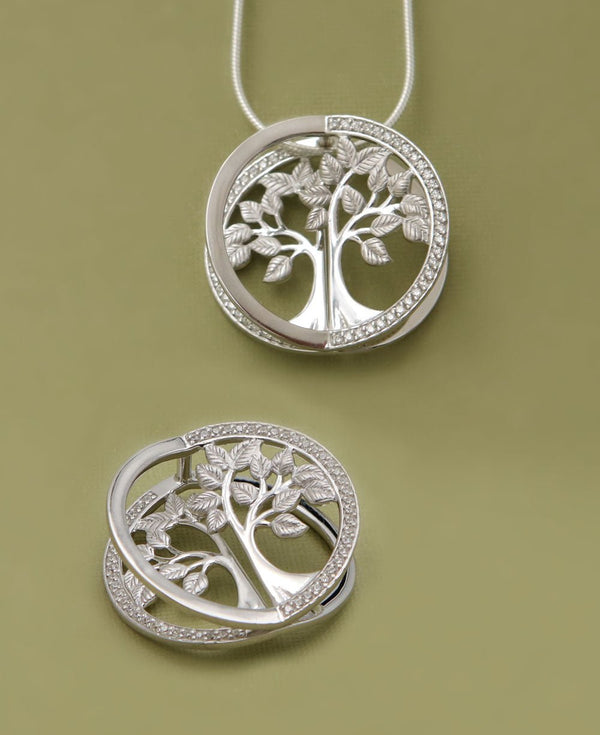 Pendants
Artistic Series Tree of Life Sterling Pendant
$128.00
-
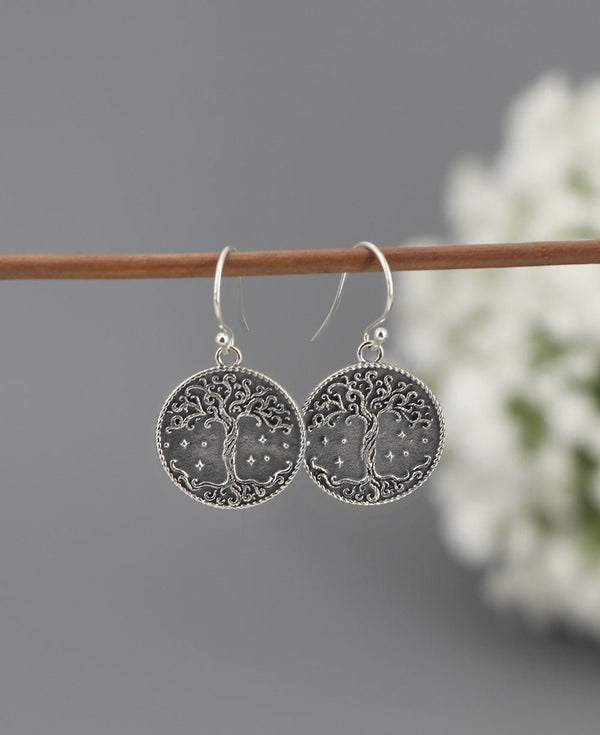 Earrings
Sterling Silver Tree of Life Earrings
$88.00
-
 Bracelets
Tree of Life Gemstone Bracelet
$40.00
-
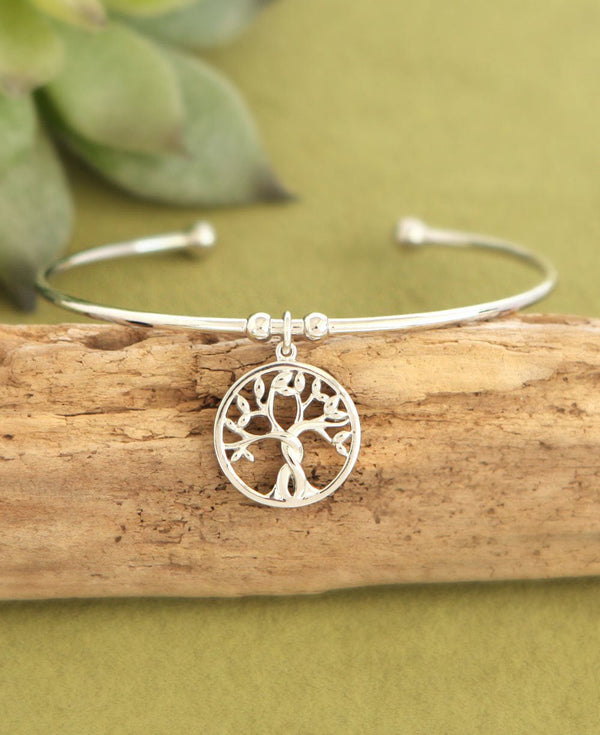 Bracelets
Sterling Silver Premium Tree of Life Charm Bracelet
$148.00
-
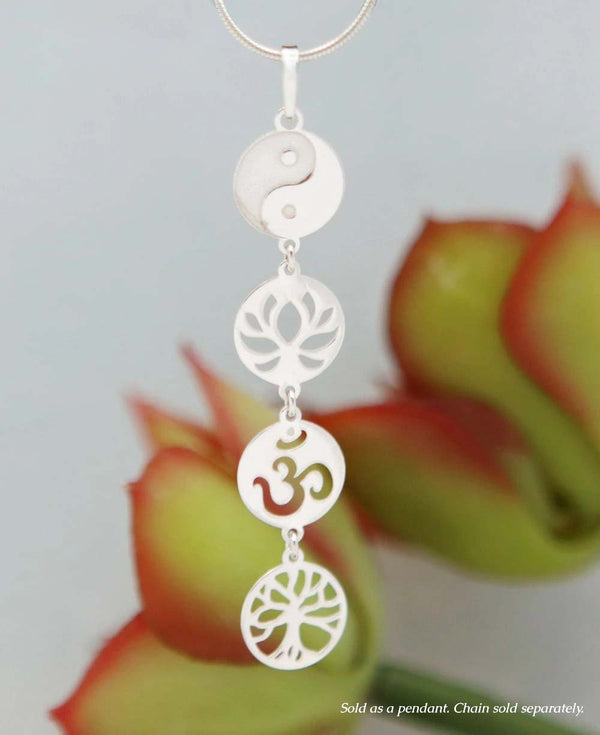 Pendants
Lotus
$46.00
-
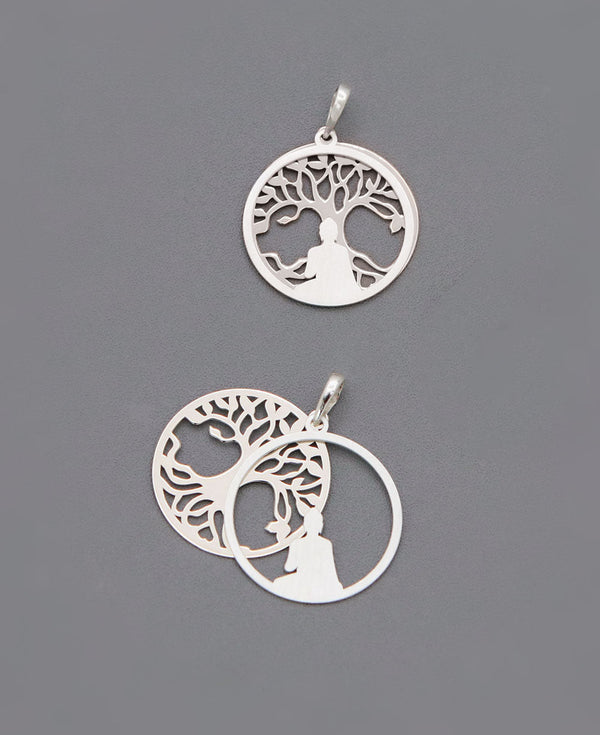 Pendants
Buddha Pendant with Layered Bodhi Tree in Sterling Silver
$48.00
-
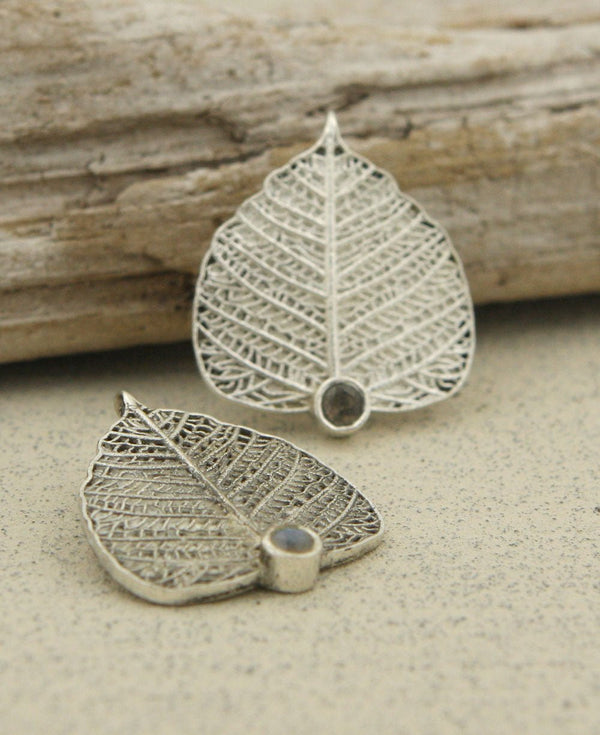 Pendants
Textured Bodhi Leaf Pendant
$54.00
-
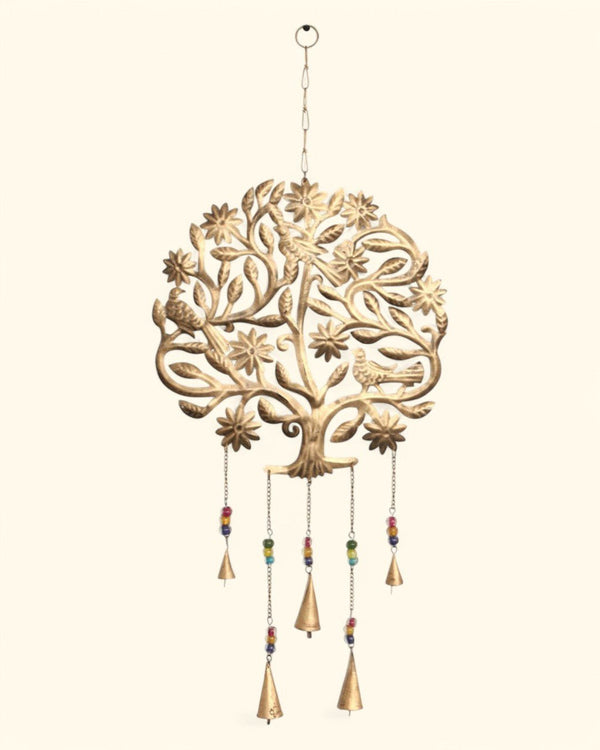 Wind Chimes
Fairtrade Tree of Life Bell Chime and Wall Hanging
$42.00
-
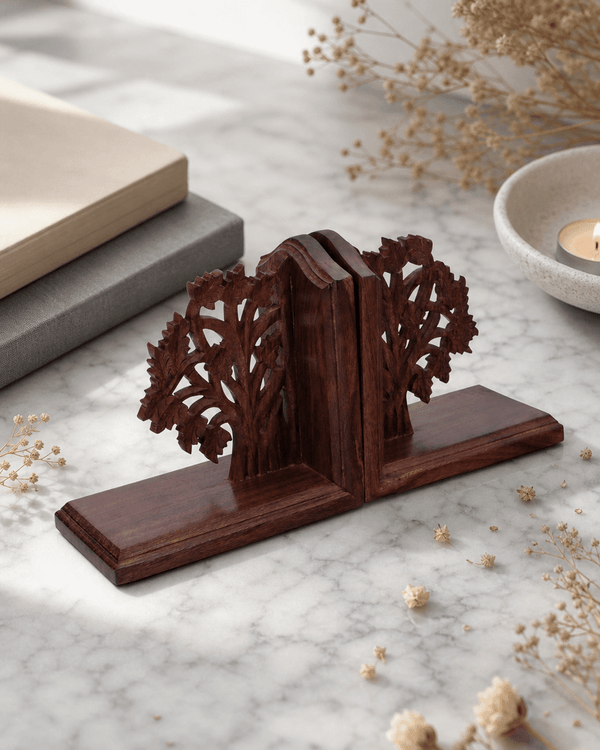 Bookends
Fairtrade Tree of Life Indian Rosewood Bookends
$88.00
-
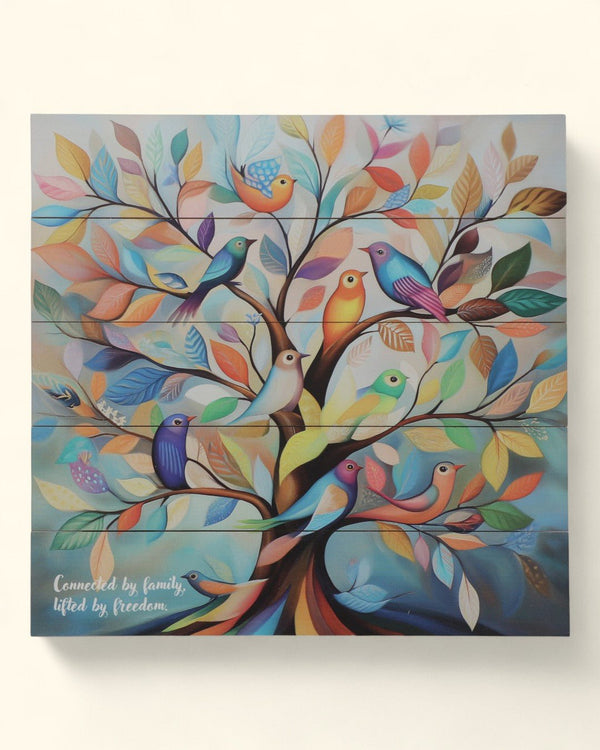 Wall Art
Colorful Family Tree of Life Wall Art
$72.00
-
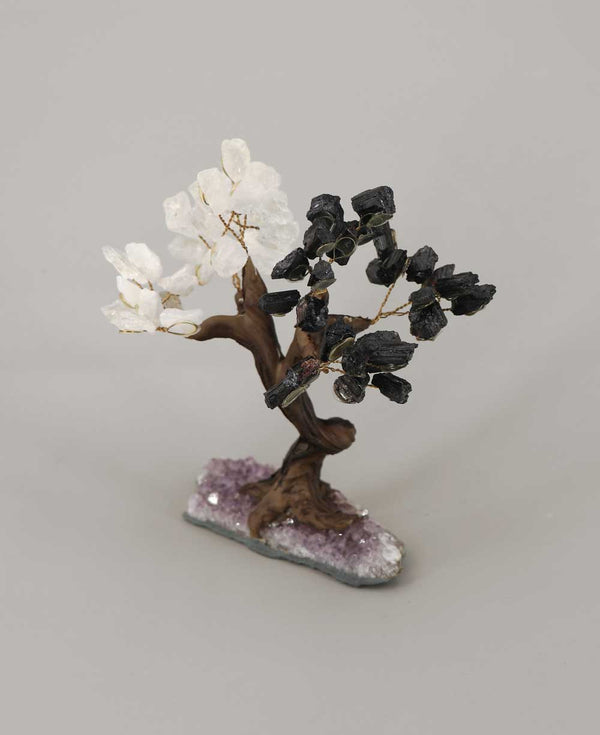 Statues
Yin Yang Gemstone Bonsai Tree for Balance
$54.00
-
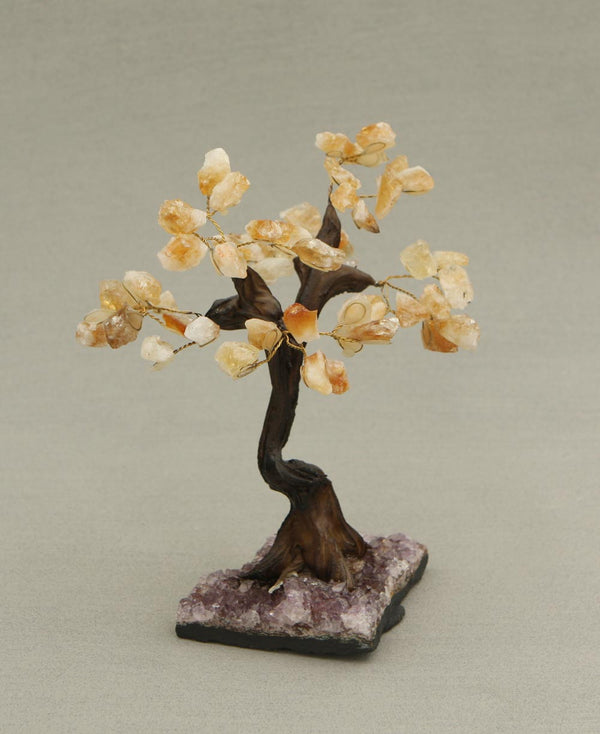 Terrariums
Citrine Gemstone Bonsai Tree
$54.00
-
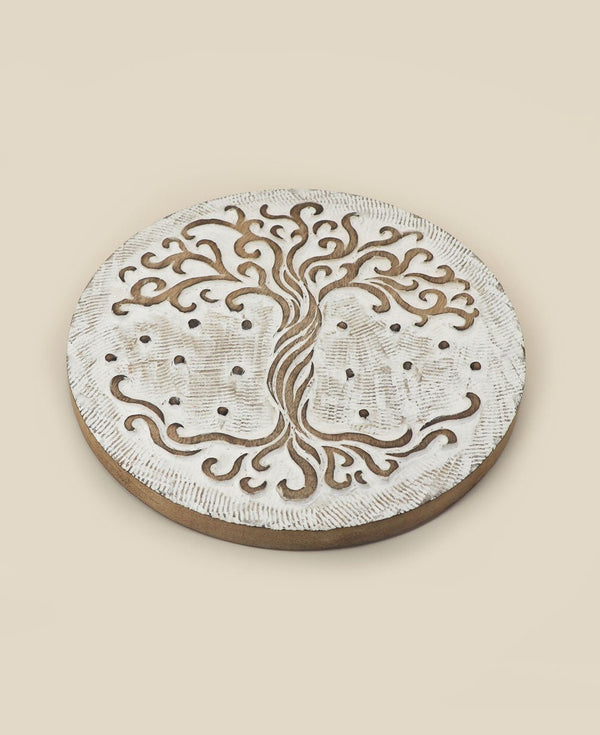 Trivets
Fairtrade Hand Carved Wood Tree of Life Trivet
$24.00
-
 Tops
Certified Fairtrade Organic Cotton Tree Of Life Celestial Tee
$42.00
-
From
-
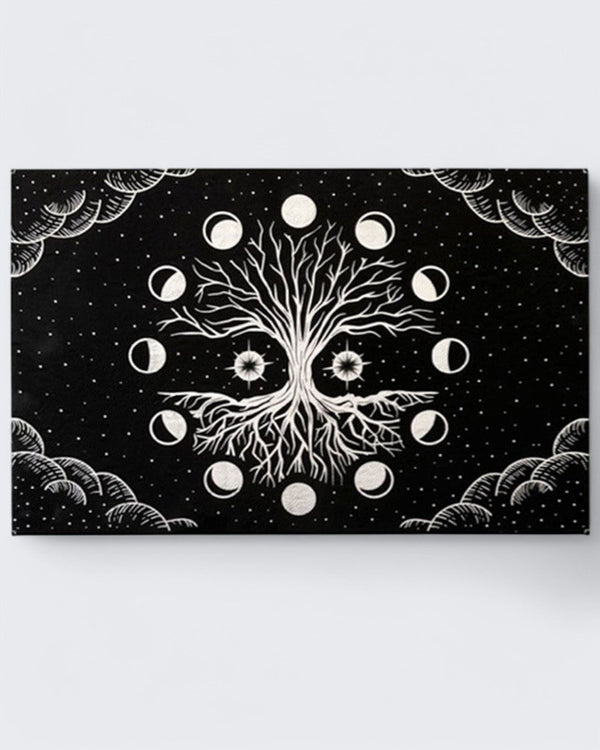 Wall Art
Black Leatherette Tree of Life & Moon Phases Wall Hanging
$48.00

The other series
The lotus and the yin yang came first
These essays are the third set in a slow walk through the symbols Buddha Groove works with. The lotus came first, eleven essays on one true thing the plant does. Then the yin yang, five essays on one hill with two faces. Each has a page like this one.
Roots wide, not deep.
A trunk that keeps every year.
Alive at the edge,
and carrying spring through the snow.
Somewhere a tree is standing in a wind tonight, held by nothing deeper than a hand's length of soil, with next spring already folded on its branches.